To learn how to make a rap song, aim for a playable demo rather than a release. Pick one idea, sketch a beat, write a verse and hook, and record a rough vocal you can listen to from start to finish. A notes app, a pulse, and a recorder are enough to begin. Choose the tools that solve your next problem; you do not need to use all of them.
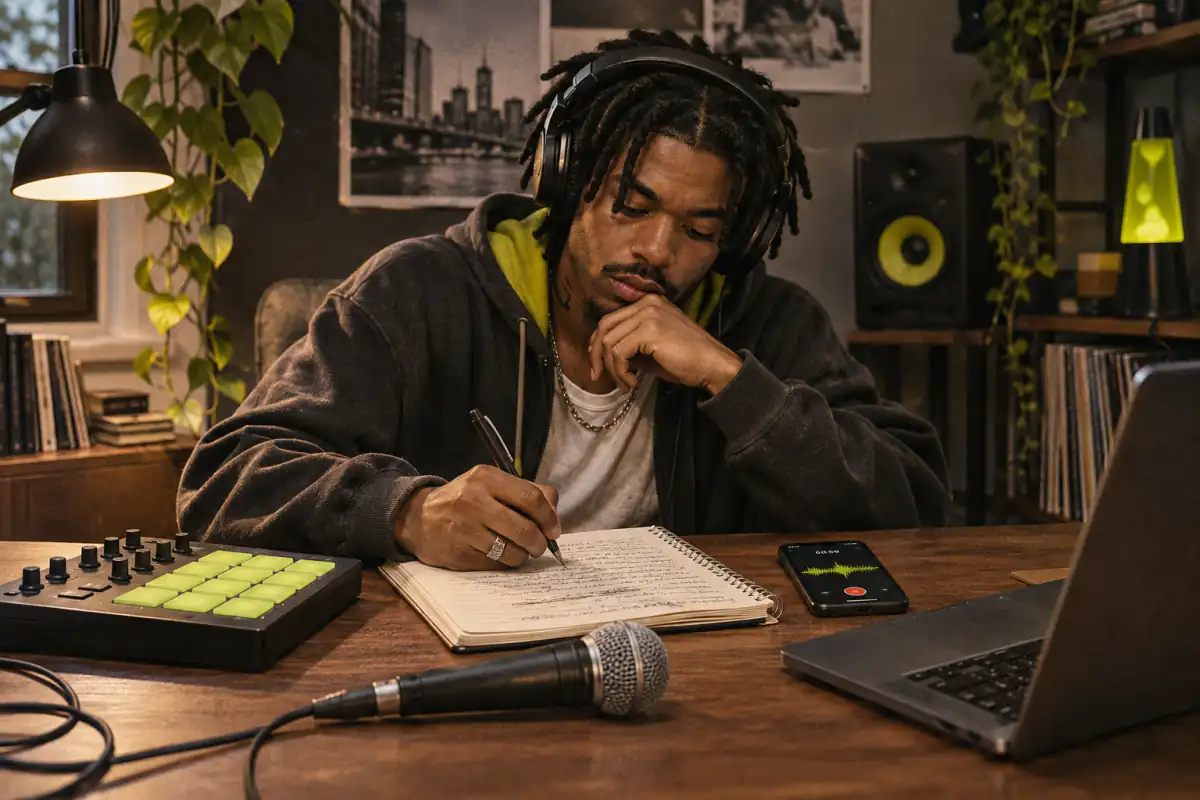
How to make a rap song from one clear idea
Write down who is speaking, what they want, and what gets in the way. If the idea has no tension, pick a smaller moment. “I wanted to quit” becomes a verse when the speaker has to decide whether to hand over a key after the last shift. Write a hook candidate in plain speech before you hunt for a clever phrase.
Name the draft after the image that sticks, not after a genre. If you are starting a new artist project, keep your working title and stage name separate. A working title can change tomorrow; a public artist name needs more thought before you put it on a release.
Plan the topic, song structure, and hookMake a stage-name shortlist if this is a new project
Sketch the beat around the voice
Pick a drum loop you can count without thinking. Speak a phrase from the hook over it and notice where the kick gives you an entrance and where the hats fight the words. Compare a straightforward backbeat with a half-time feel while keeping the same phrase. Change the rhythm before adding new sounds; that makes it easier to hear what is actually helping.
Both beat tools here synthesize an editable drum bar in your browser and export a mono WAV. The bar is material for a sketch, not a full backing track. If you want an arrangement, repeat the bar in a recording app and decide where the sections change. Ableton’s Learning Music playground is another way to try the pieces of an arrangement before committing.
Sketch a steady hip hop backbeatCompare a half-time drum patternAbleton Learning Music: experiment with beats and arrangements
Write a verse and hook that do different work
Use the verse for actions and details. Let the hook carry what you want to hear again after those details are gone. Try saying it without the verse. If the hook only makes sense when you explain the entire story, shorten it or pick a phrase that survives on its own. Berklee Online’s lyric-writing lesson offers a useful comparison between sensory verses and a more summarizing chorus.
Original illustrative demo: a band leaves a rehearsal room for the last time. The verse starts with an amp humming after everyone packs; the hook returns to “last light still on.” For a drill direction, leave a deliberate gap before the hook. For a fictional battle verse, replace the rehearsal with a visible contest and give the boast a reversal. These are different drafts, not required steps.
If the page stalls, freestyle around the image for one short round. Write down only the phrase you would actually say again. Then decide whether it belongs in the verse, the hook, or a different song.
Prepare the scene and constraint for your verseTry the song idea as a freestyle promptPlan clipped phrases and pauses for a drill versePlan the reversal in a fictional battle verseBerklee Online: build a verse and chorus from different material
Record a rough vocal and test the transition
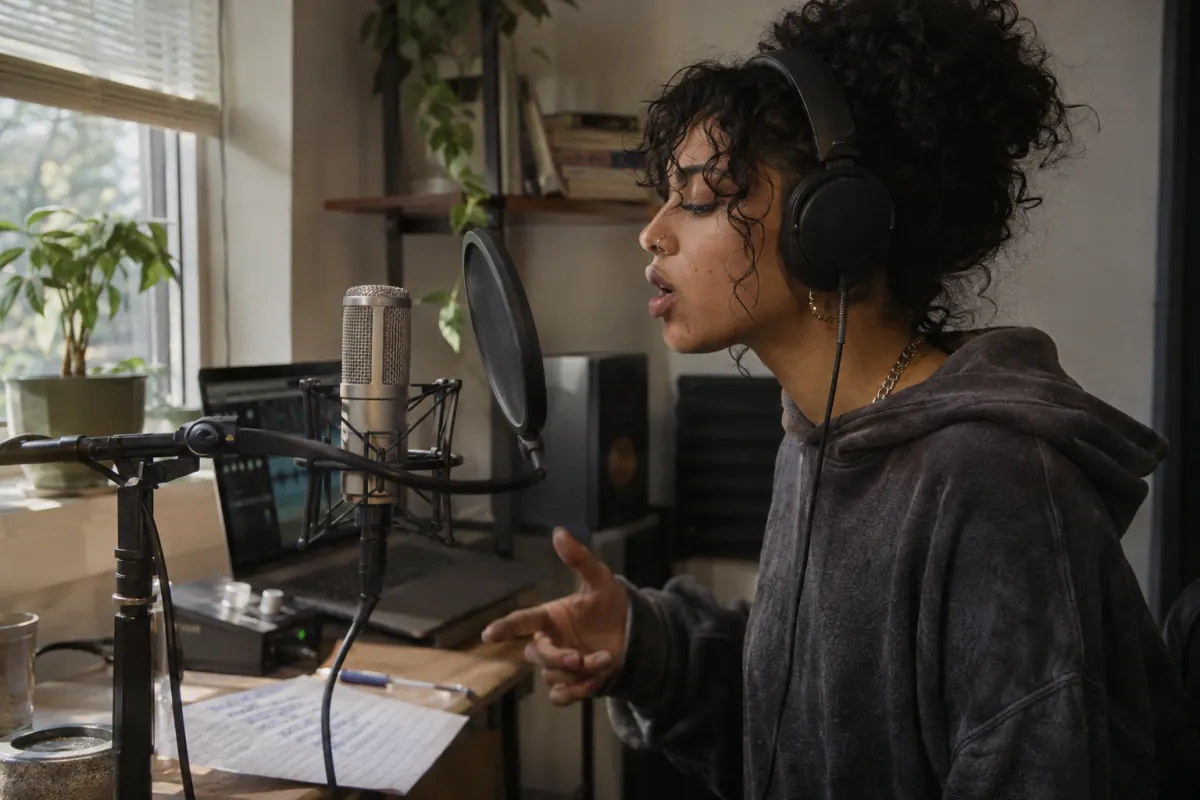
Mark the important words and places to breathe. Record a take with an ordinary speaking delivery, then another with one intentional change: a firmer hook, a longer pause, or a quieter first line. Keep the beat and the words the same. The voice brief can capture those decisions, but it does not synthesize or record your vocal. Use a phone recorder or your recording software for the take.
Listen from the beginning without following the lyrics. Can you hear where the hook arrives? If it feels like another verse, simplify the wording or give it a recurring rhythm. If the vocal disappears under the drums, lower the backing track before rewriting the line. Save a rough bounce and one note about the next change rather than treating the first playable file as the final mix.
Write an original vocal delivery brief
Verify the demo before planning a video
Play the demo to someone without explaining its story. Ask what phrase they remembered and where the energy changed. If the hook is clear and the take stays intelligible, decide whether to record again, arrange a longer version, or make a visual treatment. A video is optional; it will not fix a demo you still struggle to follow.
For a visual, describe the opening image and the gesture or framing change you want. The two video tools let you choose a curated reference and preview a portrait locally. They do not sync a finished song, process a video, or export a render. Before planning around someone else’s performance or likeness, establish what material you are actually permitted to use.
Preview a portrait for a rap performance conceptPlan a reference-led music video treatment
Next steps: finish one demo before starting another
The shortest answer to how to make a rap song is to make the next version listenable. Finish a verse and hook, record them over a beat, and decide what one revision would make the song clearer. When you know what is missing, use the specific tool or guide for that decision rather than starting over.
Frequently asked questions
Can I make a rap demo without a studio?
Yes. Write in your notes, use a steady beat you have permission to use, and record a rough take on your phone. The goal is to hear the whole idea, not to match a mastered release.
Should a beginner record the hook or verse first?
Try the hook first if it defines the rhythm or central phrase. Start with the verse if the story leads into the hook naturally. Record the transition either way.
Will the tools generate a finished song or video?
The name and drum tools run locally; writing and voice tools prepare briefs; video tools preview inputs. Recording, arranging, mixing, and video production are separate work.